What exactly is the metaverse? It’s a first-person simulated world that offers an immersive experience, allowing large groups of users to interact simultaneously. Imagine having a parallel universe right inside your bedroom, akin to Narnia with fewer battles and more socializing. The word “metaverse” combines “meta,” meaning beyond, and “verse,” a shortened form of the universe. This term was initially coined by Neal Stephenson in his science fiction novel “Snow Crash” back in the 90s, where he introduced concepts like the metaverse and avatars that we now see in the digital world.
VR vs AR vs Metaverse
To grasp the concept of the metaverse, While these terms often get conflated, knowing their differences can deepen our appreciation and comprehension. VR offers an immersive and interactive simulated environment that users experience in the first person, immersing themselves in a world where they feel a profound sense of presence. On the other hand, AR supplements the real world with digital content, enriching the user’s experience by blending virtual and real elements. The metaverse can exist in two forms: a fully virtual and self-contained world known as a virtual metaverse, or as additional layers of digital content embedded in our real world, referred to as an augmented metaverse. In essence, this encompasses both.
Metaverse and Blockchains
The metaverse is a digitally simulated universe, the experiences within it strive to represent reality as closely as possible. When you make a purchase, it becomes 100% yours. This convergence of virtual and real worlds presents a perfect opportunity for decentralized cryptocurrencies, and non-fungible tokens (NFTs) to shine. Metaverse projects like Decentraland have embraced cryptocurrencies as their official currency, as they offer enhanced safety and security compared to in-game currencies. NFTs are also integral, as they provide proof of ownership for in-game assets such as land parcels, wearables, cars, and toys. This means that the money you earn holds real-world value. Blockchain technology can further facilitate secure transactions and record ownership of customized avatars and digital assets within the metaverse.
Applications of the Metaverse
Business Meetings
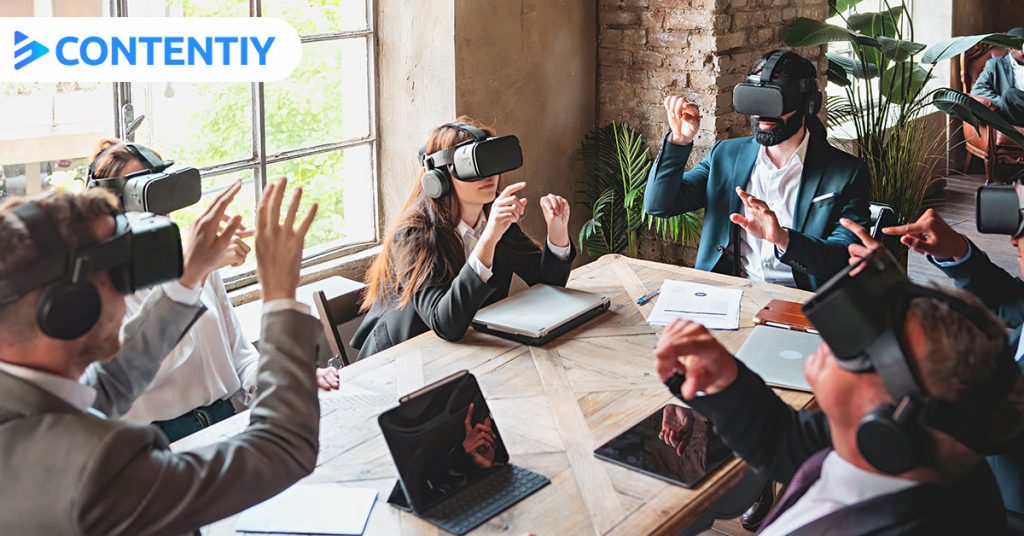
The pandemic has taught us that offices are not the only place to get work done. The metaverse takes remote collaboration to the next level. Executives from around the globe can participate in business meetings while comfortably sitting at home in their pajamas. This eliminates the need for expensive office spaces while maintaining a realistic and immersive environment for teamwork.
Virtual Learning
Education can benefit tremendously from the metaverse’s capabilities. Students can not only attend classes virtually but also engage in scientific experiments, work with chemicals, or perform virtual biopsies without getting their hands dirty. As technology becomes more affordable, students in remote areas will gain access to classrooms and laboratories previously out of reach.
Making a Living
In the metaverse, users can earn actual money through trades, real estate transactions, gaming, and event organization. Play-to-earn games are a significant part of the metaverse experience, allowing users to sell their in-game items as NFTs or trade using the metaverse’s cryptocurrency, ultimately translating into real-world earnings.
Tourism
The metaverse offers a mind-bending exploration of time and space. You can finally take that long-awaited trip to Paris or travel back in time to join Genghis Khan’s horde, sweeping through ancient empires. The metaverse enables limitless possibilities for immersive and fantastical tourism experiences.
A Few Limitations of the Metaverse
Public Acceptance
As with any novel concept, older generations may struggle to embrace new layers of reality. While millennials and Gen Z have embraced the metaverse with open arms, some may view it with skepticism. However, communities surrounding the metaverse are growing exponentially, fostering wider acceptance.
Loss of Reality
The metaverse’s potent sense of reality can be both captivating and potentially problematic. Spending excessive time in a universe filled with vibrant colors and endless adventures may lead some individuals to find the real world dull and mundane, preferring virtual interactions over physical ones. It is essential to establish age-restricting policies to prevent younger individuals from getting excessively absorbed in the metaverse.
The Best Metaverse Projects So Far

Decentraland
Decentraland is the pioneering blockchain-powered metaverse project built on the Ethereum blockchain. It allows users to build and own virtual real estate, interact with others, and explore the vast Decentraland metaverse. In-game payments are conducted using Decentraland’s official cryptocurrency called MANA, while in-game assets take the form of NFTs known as LAND. Thanks to blockchain technology, Decentraland is governed by its community of token holders, rather than centralized authorities.

Sandbox
Sandbox is another successful Ethereum-based metaverse project that empowers developers with true ownership of their creations through NFTs. It features a marketplace for trading items using the in-game cryptocurrency SAND, a game-maker tool enabling users to create, share, and monetize their games, and a Voxel Editor for creating, rigging, and animating voxel models. Staking is also available, allowing users to earn SAND by renting out their properties within the metaverse.
Recap
The metaverse can be envisioned as a computer-simulated parallel universe that mimics reality while adding new layers of experience. It liberates us from the constraints of time and place, enabling participation in business meetings, events, classes, and unimaginable adventures. With successful metaverse projects like Decentraland and Sandbox leading the way, and countless opportunities awaiting exploration, the dawn of a virtual reality era seems inevitable.